Guangdong Muchuan Sanitary Ware Co., Ltd.
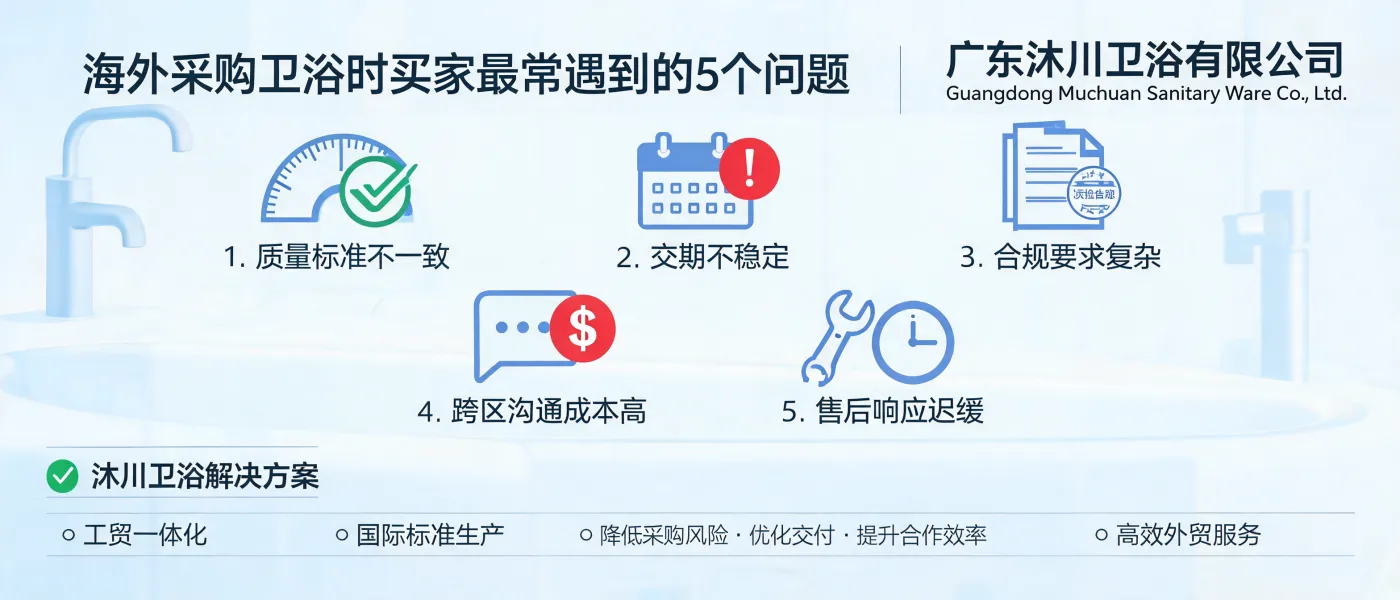
In sanitary ware sourcing, the lowest quotation is not always the safest choice. For overseas buyers, especially those handling bulk orders, project delivery, or long-term replenishment, supplier selection affects product consistency, compliance, delivery reliability, and after-sales coordination. Based in the core sanitary ware industrial belt of Foshan, Guangdong Muchuan Sanitary Ware focuses on export-oriented B2B supply and supports international buyers with integrated development, production, and testing resources.
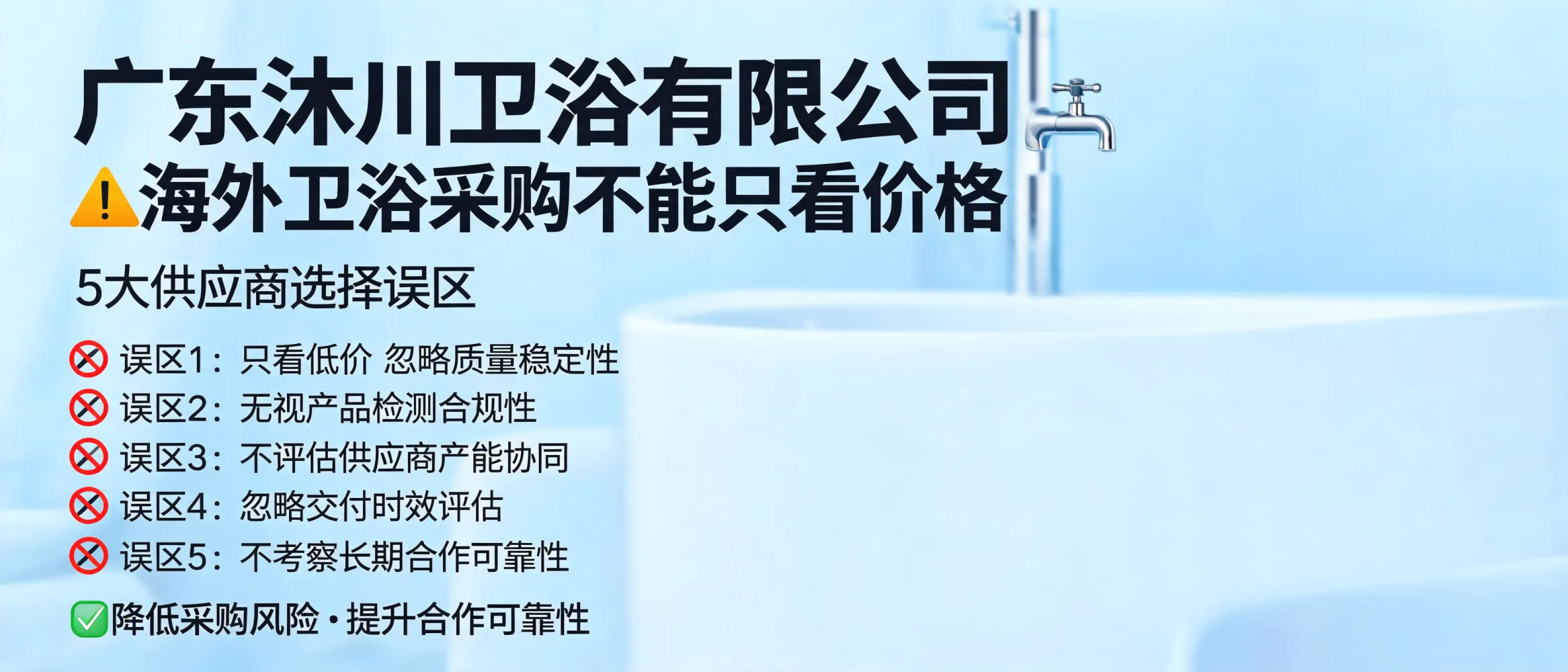
A very low unit price can hide risks such as unstable materials, inconsistent workmanship, limited quality control, or weak service support. In sanitary ware procurement, price should be evaluated together with product durability, inspection standards, communication efficiency, and the supplier’s ability to maintain stable output over time.
For overseas buyers, a more practical approach is to compare total procurement value rather than unit price alone. That includes product quality consistency, packaging protection, technical response, and the supplier’s readiness to support repeat orders without changing the approved specification.
Sanitary ware sold into different regions often needs to align with local market expectations, buyer specifications, and project-level requirements. Skipping compliance review or testing confirmation can lead to delays during import, installation, or customer acceptance.
What to confirm early: material consistency, product specifications, testing procedures, labeling requirements, and whether the supplier can follow the target market’s documentation needs.
Guangdong Muchuan Sanitary Ware integrates production and testing resources to support export-oriented orders with a more structured quality control process, helping buyers reduce avoidable compliance gaps.
Samples are useful for confirming design, finish, and initial feel, but they cannot fully represent mass production performance. A sample may meet expectations while bulk goods vary due to raw material changes, process differences, or insufficient production control.
Best practice: evaluate the sample together with the supplier’s production plan, inspection points, and confirmation process for batch consistency.
Even a qualified supplier may not be the right fit if its production capacity does not match your order volume, schedule, or shipment plan. For overseas buyers, poor capacity coordination can create bottlenecks in project delivery, seasonal replenishment, and consolidated shipping.
A supplier’s value does not end when the order is confirmed. Delivery reliability, packaging quality, order tracking, and after-sales response all influence the real procurement experience. This is especially important for overseas buyers managing cross-border logistics and coordinated installation schedules.
Delivery reliability
Confirm whether the supplier can support agreed timelines and shipment coordination.
Issue handling
Understand how the supplier responds to quality questions, missing items, or documentation needs.
Long-term cooperation
Choose partners that can support repeat orders with consistent standards and clear communication.
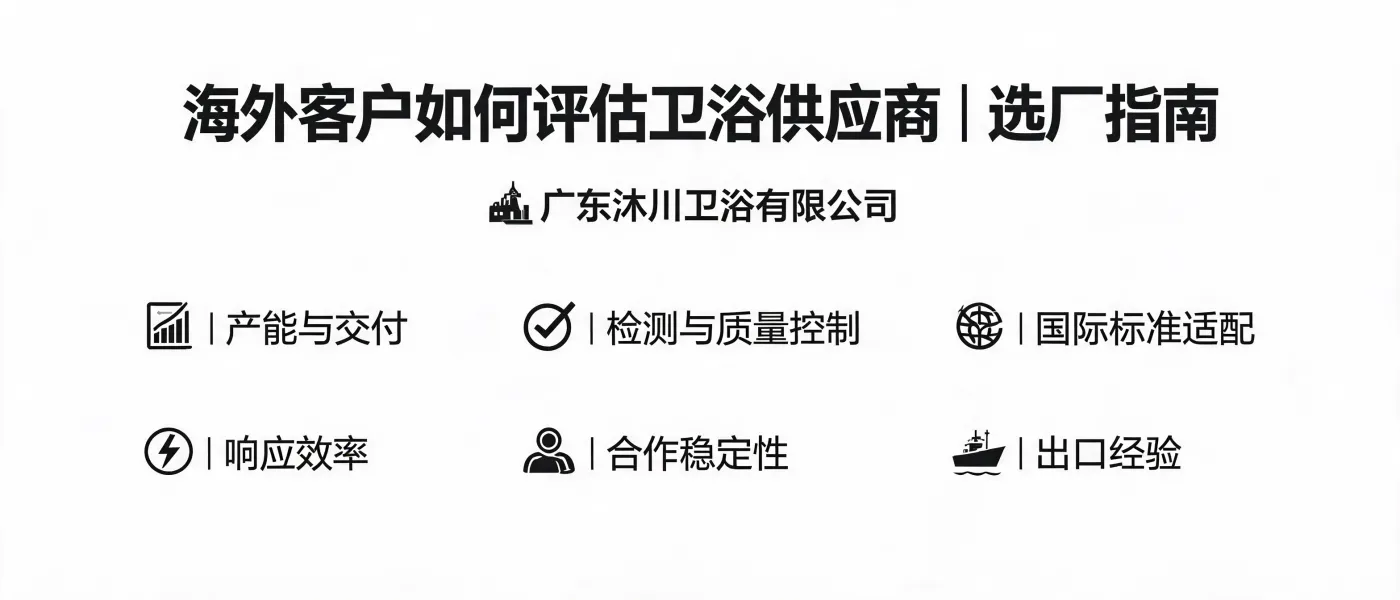
When comparing sanitary ware suppliers, overseas buyers can use the following checklist to reduce risk and improve decision quality:
Located in Foshan’s sanitary ware industrial cluster, Guangdong Muchuan Sanitary Ware Co., Ltd. serves international B2B buyers with export-focused manufacturing capabilities and a practical understanding of overseas procurement requirements. Our business experience across Europe, the Middle East, Southeast Asia, and other markets has shaped a supply approach centered on compliance, responsiveness, and delivery coordination.
For hotel groups, building material distributors, and cross-border e-commerce buyers, the real value of a sanitary ware supplier lies in more than price. It lies in whether the supplier can help maintain product consistency, support required standards, and keep communication and delivery under control throughout the purchasing cycle.


 74
|
74
|
 bathroom cabinet storage tips
adjustable shelf bathroom cabinet
silent hydraulic hinge
waterproof mold-resistant bathroom cabinet
bathroom cabinet storage tips
adjustable shelf bathroom cabinet
silent hydraulic hinge
waterproof mold-resistant bathroom cabinet
 72
|
Guangdong Muchuan Sanitary Ware Co., Ltd.
sanitary supplier evaluation
factory selection guide
international standards for sanitary ware
72
|
Guangdong Muchuan Sanitary Ware Co., Ltd.
sanitary supplier evaluation
factory selection guide
international standards for sanitary ware


 132
|
Hotelgruppen-Beschaffung
Projektabwicklung
Qualitätsprüfung
Guangdong Muchuan Sanitary Ware
132
|
Hotelgruppen-Beschaffung
Projektabwicklung
Qualitätsprüfung
Guangdong Muchuan Sanitary Ware