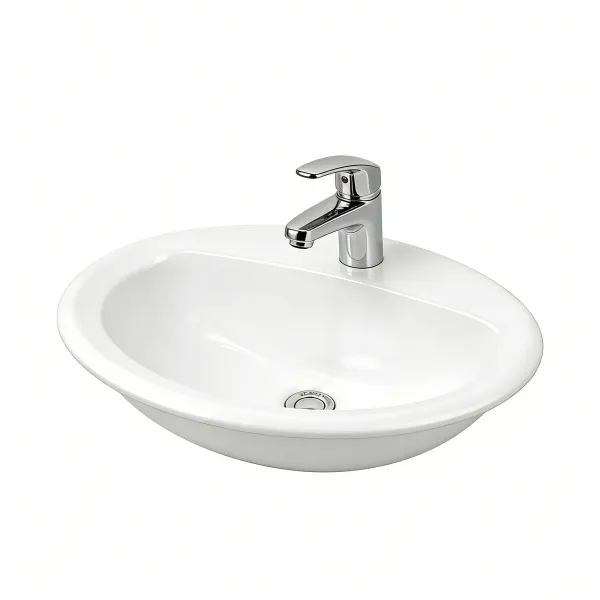
Maintaining hygienic surfaces in kitchens and high-frequency public restrooms presents significant challenges for facility managers and procurement specialists. Traditional ceramic glazes, while effective in appearance, often harbor microscopic pores that facilitate dirt adherence, bacterial growth, and chemical deterioration. These issues contribute to increased cleaning frequency, escalated maintenance expenses, and compromised user experience. Emerging as a revolutionary solution, nano-glaze technology leverages advanced material science to greatly enhance the surface properties of sanitaryware, conferring superior anti-stain, mildew-resistant, and acid-alkali durable characteristics.
Nano-glaze surfaces achieve their enhanced performance through engineered nanostructures embedded within the glaze layer. These nano-scale modifications significantly reduce surface energy and surface roughness, typically achieving a surface smoothness increase of over 30% compared to conventional glazes. This limits the adhesion of contaminants and microbial biofilms, a critical factor for sanitation in environments subject to heavy use. Moreover, the advanced chemical stability ensures resistance against common cleaning agents and exposure to acidic and alkaline substances, extending the lifespan and aesthetic integrity of sanitary fixtures.
| Property | Traditional Glaze | Nano-Glaze |
|---|---|---|
| Water Absorption Rate | 0.4% - 0.6% | ≤ 0.1% |
| Surface Smoothness Improvement | Baseline | +30%+ |
| Stain Adhesion Strength | High | ~40% Lower |
| Mold Resistance | Moderate | Enhanced |
In commercial kitchens, nano-glazed sanitaryware significantly reduces grease and food residue buildup due to its low surface energy and smooth texture, enabling facilities to cut cleaning cycles by up to 25%, based on industry case studies. This translates into measurable labor cost savings and extended intervals between deep cleans.
Similarly, in public restrooms with high user turnover, nano-glaze’s antimicrobial properties help curb mold growth and bacterial colonization in damp surfaces such as sinks and urinals. Facility operators benefit from up to 30% lower maintenance costs and reduced chemical cleaner consumption.

To maximize nano-glaze longevity and performance, routine cleaning with pH-neutral, non-abrasive detergents is advised. Avoid harsh acidic or alkaline chemicals that may, over prolonged periods, degrade surface coating. Use soft microfiber cloths for wiping to preserve the smoothness and minimize micro-scratches. Properly scheduled maintenance not only extends product life but also sustains the superior sanitary performance, vital in hospitality, healthcare, and commercial building sectors.


 207
|
207
|
 REACH certification for sanitary ceramics
Heavy metal control standards
B2B sanitary procurement guide
Ceramic water absorption control
ISO9001 quality management system
159
|
nanotech glaze
ceramic washbasins
sanitary ware cleaning
stain resistance
high-traffic sanitary equipment
74
|
nano glazing technology
bathroom fixture cleaning
stain resistance
mold prevention
acid-alkali durability
REACH certification for sanitary ceramics
Heavy metal control standards
B2B sanitary procurement guide
Ceramic water absorption control
ISO9001 quality management system
159
|
nanotech glaze
ceramic washbasins
sanitary ware cleaning
stain resistance
high-traffic sanitary equipment
74
|
nano glazing technology
bathroom fixture cleaning
stain resistance
mold prevention
acid-alkali durability
 211
|
ceramic washbasin
hotel bathroom design
nano-glaze technology
drainage system optimization
ultra-thin edge design
273
|
Ceramic washbasin selection
Ultra - thin edge ceramic washbasin
High - temperature fired ceramic
Hotel bathroom design
Nano - glaze anti - soiling
211
|
ceramic washbasin
hotel bathroom design
nano-glaze technology
drainage system optimization
ultra-thin edge design
273
|
Ceramic washbasin selection
Ultra - thin edge ceramic washbasin
High - temperature fired ceramic
Hotel bathroom design
Nano - glaze anti - soiling