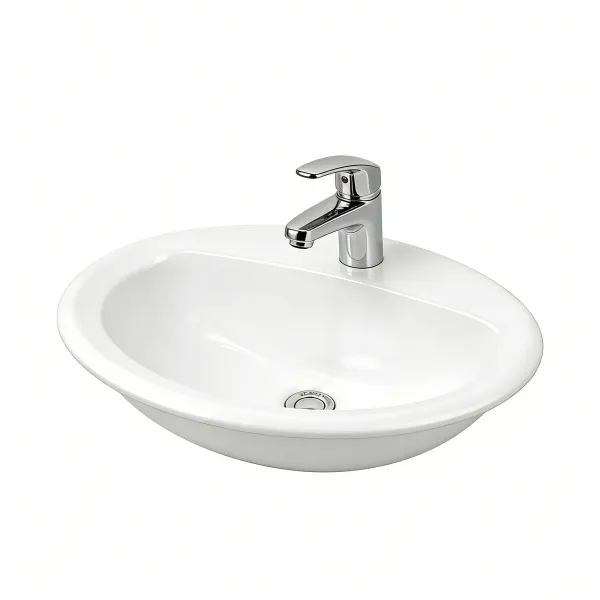
Are you frequently frustrated by ceramic washbasins that quickly yellow, accumulate stubborn stains, and demand constant scrubbing? For procurement professionals and bathroom designers sourcing for commercial projects—especially hotels—understanding the glaze technology behind ceramic washbasins is crucial to avoid these common pitfalls and select truly durable products.
Ordinary ceramic washbasins often suffer from surface degradation, where mineral deposits, soap scum, and grime cling tightly over time. This not only taints the basin's appearance but drives up cleaning labor and chemical costs—critical downsides in high-usage environments such as hotels or office buildings.
The secret lies in the ceramic’s glaze surface. Traditional glaze coatings are generally thicker with larger micro-pores, which inadvertently act as catchment areas for dirt and stains. In contrast, nano-glaze technology utilizes ultra-fine particles resulting in a smoother, denser surface that resists soil adhesion at the microscopic level.
Nano-glaze ceramic surfaces can improve stain resistance by up to 40% compared to traditional glaze.
Beyond the glaze alone, the ceramic substrate’s physical characteristics dictate overall durability and low stain absorption. High-temperature firing—typically at or above 1250°C—ensures the body of the basin attains optimal vitrification, reducing porosity. This process correlates directly to the basin’s water absorption rate, a key indicator of quality.
For premium products, look for basins with absorption rates less than 0.1%, minimizing water ingress that leads to staining and microbial growth.
When ceramic washbasins resist stains effectively, commercial properties witness measurable benefits:
When inspecting ceramic washbasins, your tactile assessment is just as important as certificates. Here are key checkpoints:

When evaluating suppliers, insist on internationally recognized certifications such as:
A major 5-star hotel chain replaced conventional washbasins with nano-glaze, high-temperature fired ceramic models featuring absorption rates below 0.1%. Over six months, they reported:
Additionally, the basin’s ultra-thin edge design contributed to more space-efficient restroom layouts, enhancing the overall aesthetic experience without compromising function.

 115
|
115
|
 high-temperature ceramic basin
antibacterial ceramic sink
stain-resistant bathroom basin
E0 solid wood vanity
high-temperature ceramic basin
antibacterial ceramic sink
stain-resistant bathroom basin
E0 solid wood vanity
 105
|
ceramic sanitaryware drainage performance
ANSI/ASHRAE standard
sanitaryware quality inspection
international certification
engineering procurement guide
105
|
ceramic sanitaryware drainage performance
ANSI/ASHRAE standard
sanitaryware quality inspection
international certification
engineering procurement guide
 398
|
low-pressure shower solutions
pressure-boosting handheld shower
water-saving showerhead
five-mode showerhead comparison
398
|
low-pressure shower solutions
pressure-boosting handheld shower
water-saving showerhead
five-mode showerhead comparison
 141
|
high temperature ceramic firing
low water absorption ceramic
ISO 9001 certified ceramics
REACH compliant ceramics
ANSI ASHRAE standard ceramic
360
|
ceramic basin edge thickness
luxury hotel bathroom design
ultra-thin ceramic washbasin
bathroom space optimization
high-end hospitality sanitaryware
141
|
high temperature ceramic firing
low water absorption ceramic
ISO 9001 certified ceramics
REACH compliant ceramics
ANSI ASHRAE standard ceramic
360
|
ceramic basin edge thickness
luxury hotel bathroom design
ultra-thin ceramic washbasin
bathroom space optimization
high-end hospitality sanitaryware